Introduction to Python
1. What is Python?
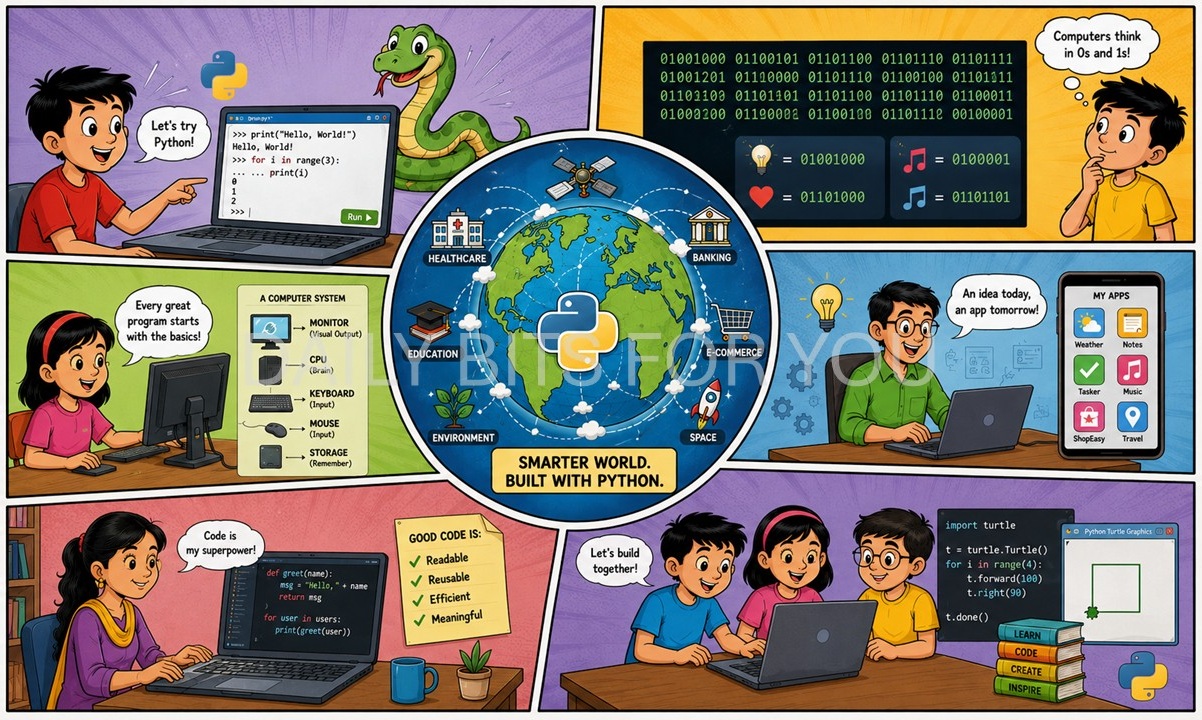
Python is a popular computer programming language used to give instructions to computers. It is known for its simple and readable written form, making it one of the easiest programming languages for beginners to learn. Python is widely used in many fields such as web development, artificial intelligence, data science, automation, cybersecurity, robotics, and game development. Because Python resembles plain English more than many other programming languages, learners can focus more on understanding logic and problem-solving instead of struggling with complicated symbols and rules.
- Python was created by Guido van Rossum in 1991.
- It is considered a high-level programming language.
- Python code is easier to read compared to many older languages.
- It is used by companies like Google, Netflix, and NASA.
- Python supports both simple and advanced programming projects.
- It is one of the most widely taught beginner programming languages today.
2. What is a Computer Programming Language?
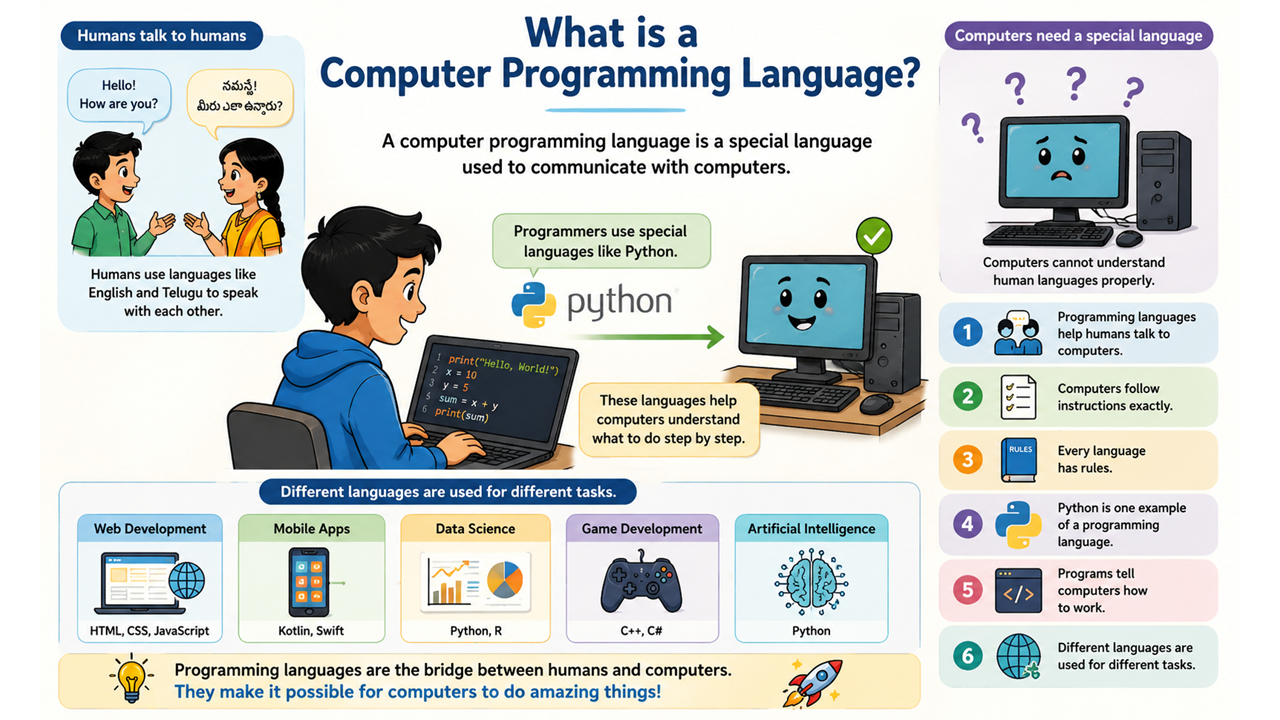
A computer programming language is a structured way of communicating instructions to a computer. Just as humans use languages like English, Telugu, or Hindi to communicate with each other, programmers use programming languages to communicate with machines. These languages follow strict rules called syntax so that the computer can correctly understand and execute commands. Different programming languages are designed for different purposes, but all of them help humans control computers and create software, applications, websites, and digital systems.
- Programming languages act as a bridge between humans and computers.
- Every programming language has its own grammar and structure.
- Computers cannot think independently; they only follow instructions.
- Languages like Python simplify complex computer operations.
- Programming languages help create apps, games, and websites.
- Examples include Python, Java, C++, and JavaScript.
3. Why Do Computers Need a Different Language Instead of Normal English?
Computers cannot truly understand human language the way humans do. Natural languages such as English contain ambiguity, emotions, multiple meanings, and flexible grammar, which can confuse computers. Programming languages are designed to be precise and unambiguous so that a computer knows exactly what action to perform. Even a small mistake in punctuation or spelling can change the meaning of a computer program. Because computers work using strict logical rules, they require languages that are structured, predictable, and mathematically precise.
- Human languages often contain multiple meanings for the same word.
- Computers require exact instructions without ambiguity.
- Programming languages follow strict syntax rules.
- A single missing symbol can cause an error.
- Computers process logic, not emotions or context.
- Structured languages make software development reliable.
4. How Can a Computer Understand Python?
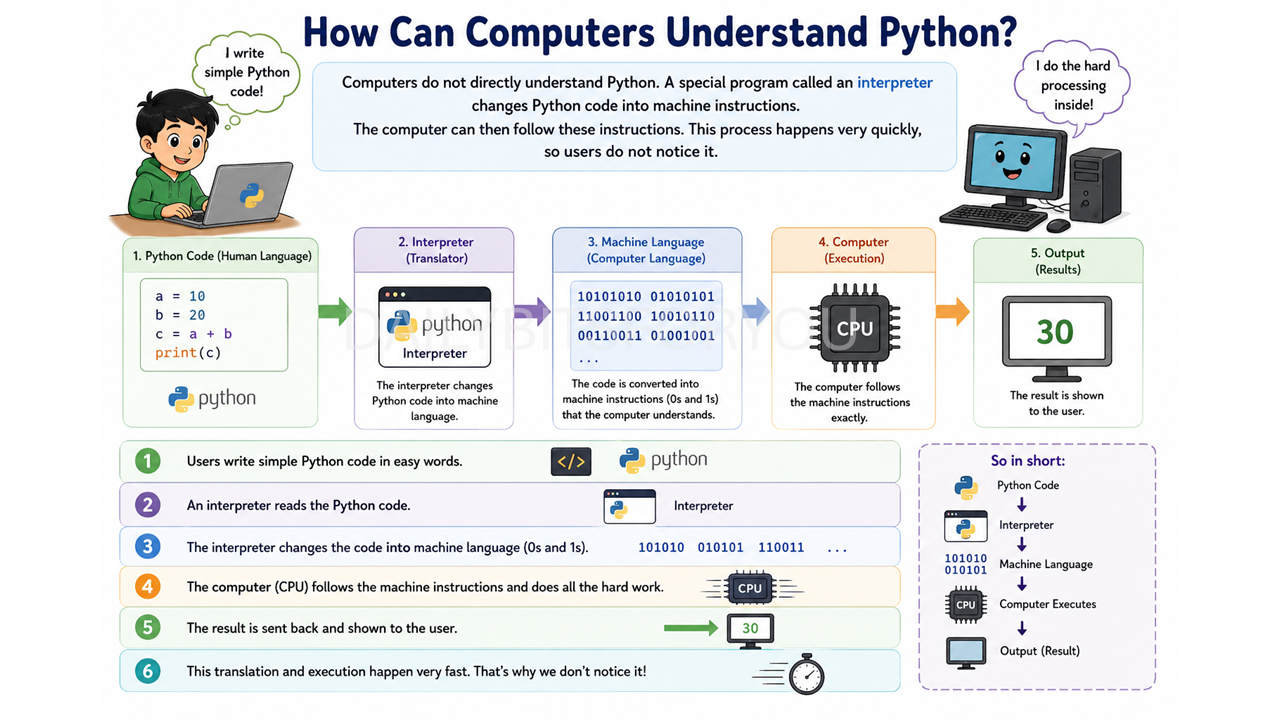
A computer does not directly understand Python itself. Instead, special software called an interpreter translates Python code into machine-level instructions that the computer’s processor can execute. In Python, the interpreter reads the code line by line and converts it into low-level instructions closer to binary language. This process allows humans to write readable programs while computers still receive instructions in a form they can process internally.
- Python uses an interpreter to run code.
- The interpreter converts Python into machine instructions.
- Computers ultimately process electrical signals and binary data.
- Python hides much of the complexity of machine-level programming.
- The translation process happens very quickly.
- This makes programming easier for humans.
5. What is Binary Code?
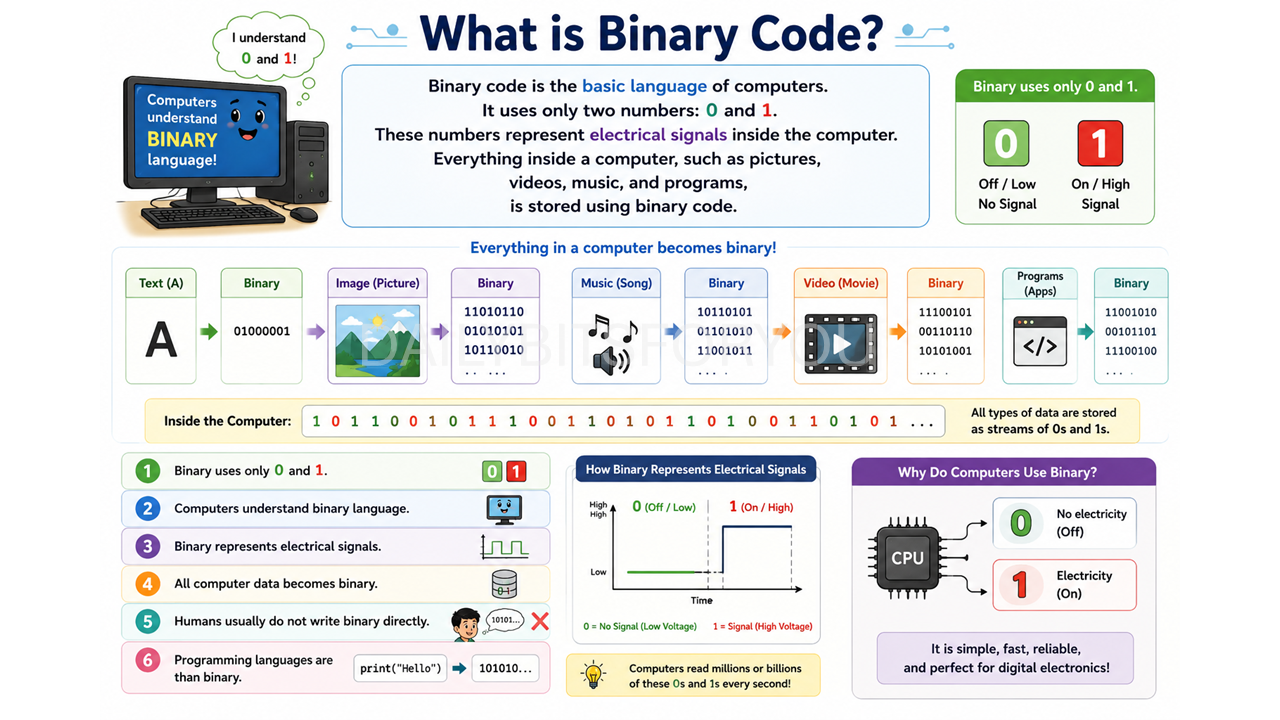
Binary code is the most basic language understood by computers. It consists only of two digits: 0 and 1. These numbers represent electrical states inside a computer, such as ON and OFF. Every image, video, website, song, and program inside a computer is ultimately converted into binary form. Although humans rarely write large programs directly in binary because it is extremely difficult and time-consuming, all programming languages eventually get translated into binary instructions for the computer hardware to execute.
- Binary uses only 0s and 1s.
- It represents electrical signals inside a computer.
- All computer operations are based on binary processing.
- Higher-level languages simplify working with computers.
- Binary is much harder for humans to read and write.
- Modern software automatically converts code into binary.
6. Can Anyone Learn Python?
Yes, almost anyone can learn Python with patience and consistent practice. Python is specifically known for being beginner-friendly because its syntax is simple and readable. Students, working professionals, artists, teachers, and even children can start learning Python without needing advanced technical knowledge. The most important skills are curiosity, logical thinking, and a willingness to practice regularly. Like learning any language or skill, progress improves over time with experience and problem-solving.
- Python is designed to be easy for beginners.
- No advanced mathematics is required to start.
- Regular practice matters more than natural talent.
- Many free learning resources are available online.
- Beginners can start with small projects and experiments.
- Learning programming improves logical thinking skills.
7. What Do We Need to Start Using Python?
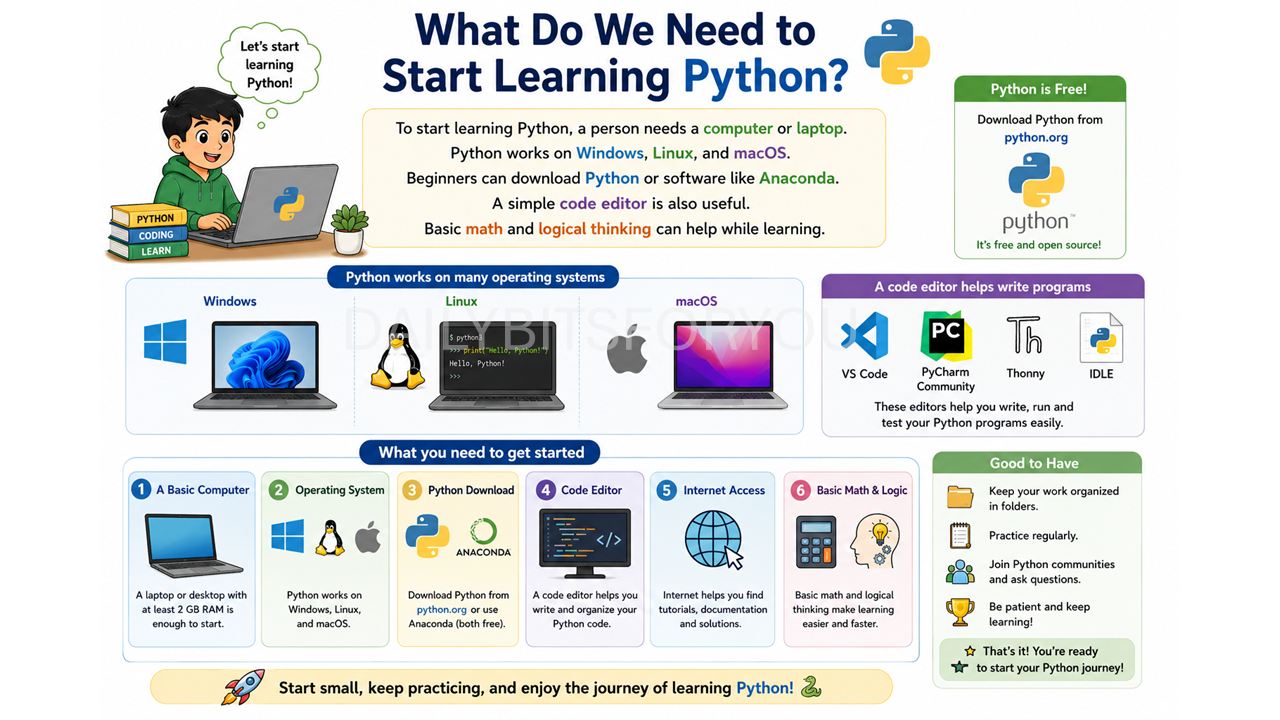
To start learning Python, a person mainly needs a computer and basic familiarity with using an operating system. Python can run on Windows, Linux, and macOS systems. Beginners usually install Python itself or use beginner-friendly software packages such as Anaconda, which includes Python and additional tools for coding and data science. A text editor or coding environment is also useful for writing programs. While advanced mathematics is not necessary initially, basic arithmetic and logical thinking are helpful for understanding programming concepts.
- A basic computer or laptop is usually enough.
- Python works on Windows, Linux, and macOS.
- Beginners can install Python from the official website.
- Software like Anaconda provides additional tools.
- A code editor helps write and organize programs.
- Internet access helps with learning resources and tutorials.
8. What Are the Prerequisites for Learning Python?
Python has very few prerequisites, which is one reason it is so popular among beginners. A student with middle-school-level mathematics and basic computer knowledge can begin learning Python comfortably. Learners should know how to use a keyboard, manage files and folders, install software, and operate a computer system. Basic logical reasoning is more important than advanced mathematics in the early stages. As learners move into fields such as artificial intelligence, data science, or scientific computing, stronger math skills may become more useful.
- Basic arithmetic and simple algebra are sufficient initially.
- Middle-school or early high-school math is usually enough.
- Learners should know basic computer operations.
- Understanding logic and sequences is helpful.
- Advanced math becomes useful in specialized fields later.
- Consistency and practice are more important than prior experience.
9. Why Should People Learn Python Today?
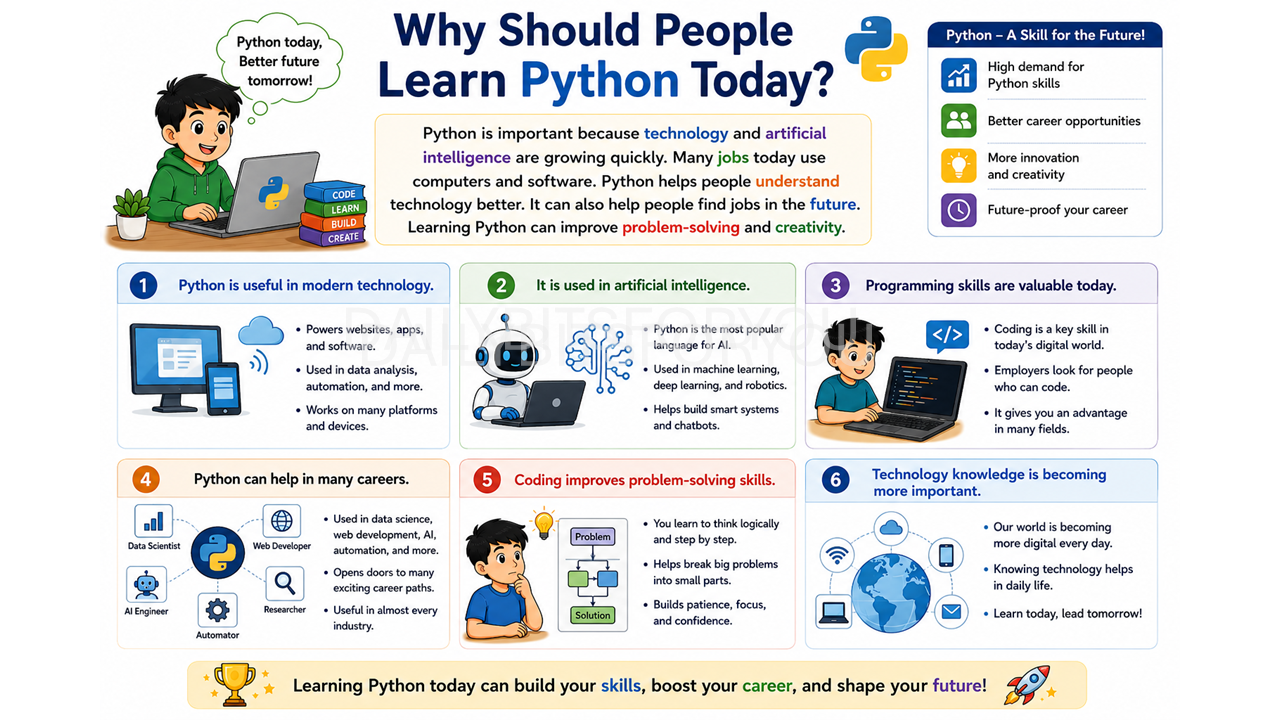
Learning Python is valuable because computers and artificial intelligence are becoming increasingly important in modern society. Python is widely used in automation, machine learning, data analysis, cybersecurity, finance, and scientific research. Even outside the technology industry, programming skills are becoming useful in many professions because they help people automate repetitive tasks and work more efficiently. In a world shaped by digital systems and AI, understanding a programming language gives people a better understanding of how technology works and prepares them for future opportunities.
- Python is heavily used in artificial intelligence and data science.
- Programming skills are valuable in many careers.
- Python can automate repetitive tasks.
- Learning coding improves analytical thinking.
- Technology skills are increasingly important worldwide.
- Python opens pathways to many modern industries.
So…….
Python is a simple and powerful programming language that helps people communicate with computers. It is easy for beginners to learn and is used in many important fields such as artificial intelligence, web development, robotics, and data science.
Learning Python does not require advanced knowledge, but it does require practice, patience, and curiosity. In today’s digital world, understanding programming can help people develop useful skills and better understand modern technology.
As computers become a bigger part of everyday life, learning Python can open many opportunities for education, creativity, and future careers.